
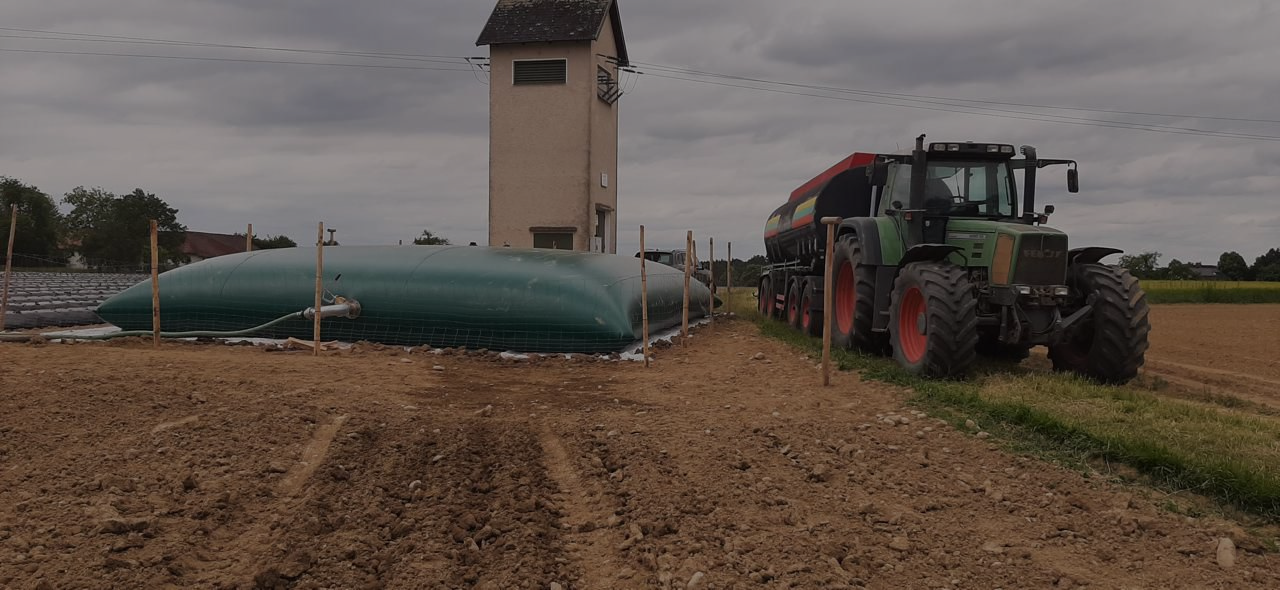
flexible tanks installation
Flexible or rigid tank: how to choose water storage?

Flexible or rigid tank: how to choose water storage?
Choosing between a flexible or rigid tank involves more than comparing two types of container. The right option depends first on the liquid to be stored, the required volume, the space available, the intended duration of use and the constraints of the site. Whether the project concerns rainwater harvesting, agriculture, a construction site, an industrial facility or a fire-water reserve, the priorities will not be the same.
A flexible tank, also called a bladder tank or flexible water tank, is a closed technical-fabric reservoir installed on a prepared surface. A rigid tank retains its shape whether empty or full and may be above ground or, depending on the model and project, incorporated into an installation. Both options have strengths and constraints. This guide helps you assess the practical requirements of your project rather than treating one solution as universally better than the other.
Flexible or rigid tank: a design difference that affects the whole project
A flexible tank holds liquid within a flexible enclosure. When empty, it is compact, which can simplify transport and logistics where access is restricted. Once filled, it takes its shape on the ground. It therefore needs a level, stable, clean and properly prepared base, with anything that could damage the tank fabric removed.
A rigid tank keeps its form whether it is empty or full. Depending on the product, it may be made from different materials and installed above ground or as part of a dedicated structure. Its dimensions, weight, delivery route, handling requirements and any installation works should be considered before the project begins.
The decision is therefore about siting and operation as well as storage itself. In either case, check that the stored liquid is compatible with the tank, valves, connections and accessories before selecting a solution.
Comparison: the key criteria for making a decision
| Criterion | Flexible tank | Rigid tank |
|---|---|---|
| Transport when empty | Compact format that can suit restricted access and demanding logistics. | Bulk is determined by the tank’s volume and fixed structure. |
| Installation | Installed on a level, stable, clean and prepared platform. | Above-ground installation or specific works, depending on the model and siting. |
| Visual footprint | A low-profile ground-level reservoir that may be less visually prominent, depending on the site. | An above-ground structure is visible; an underground option requires a suitable dedicated project. |
| Adaptation to capacity | Capacities and equipment can be configured to suit the project. | Choice depends on available models, transport and installation feasibility. |
| Temporary use | Particularly relevant where mobility, temporary storage or removal after use is important. | Often selected for a permanent installation already planned within the site layout. |
| Main point of attention | Careful ground preparation and protection from aggressive objects are essential. | Delivery access, lifting or handling, a suitable base and possible works must be planned. |
This comparison provides a useful starting point, but it does not replace a review of the site. A flexible tank is not designed to be buried directly. Conversely, a rigid tank is not always the most practical answer when water storage needs to be established promptly on land that is already available and suitable for a prepared base.
When is a flexible tank a good choice?
A flexible tank can be an effective option when the aim is to store liquid without extensive construction works, provided that the ground can be prepared correctly. It can serve many water-storage needs, including rainwater harvesting, irrigation, temporary storage and compatible agricultural or industrial applications. Explore the available flexible tank range to identify the product family most relevant to your project.
Rainwater harvesting and storage
A flexible tank can be configured as a reserve supplied by a roof or a collection network. It provides storage capacity without leaving a large rigid structure in place when empty. Sizing should nevertheless take account of the collection area, anticipated demand, seasonal variations and the space available on the ground.
Stored rainwater should be kept distinct from water intended for human consumption. A dedicated potable-water range is required for potable water applications, and the requirements applicable to the individual project should be checked.
Agriculture, irrigation and seasonal demand
On an agricultural holding, water needs may change with crops, irrigation periods, site operations and seasonal activity. A flexible agricultural tank can create a reserve close to the point of use, subject to suitable ground preparation and the selection of appropriate filling and emptying equipment.
Flexible tanks may also be suitable for liquid fertilisers or compatible effluents, but only where the chosen range and configuration are intended for that specific liquid. Compatibility must never be assumed from one product or liquid to another without technical confirmation.
Construction sites, remote locations and temporary needs
On a construction site or at a location without fixed storage, the compact format of a flexible tank when empty can make transport and logistics easier. It may provide temporary water storage for uses compatible with the project. Quick deployment does not remove the need to prepare the ground: an uneven, dirty or stony platform increases risk to the installation. For practical guidance, see six mistakes to avoid when installing a flexible tank.
When might a rigid tank be preferable?
A rigid tank can be a logical choice where a project includes a fixed installation integrated into the site’s layout, or where a particular form of siting is required. It may also be appropriate where the available land cannot provide the level horizontal area needed for a flexible tank of the target capacity.
Choosing a rigid solution means planning for delivery, vehicle access, handling equipment, the supporting base and, according to the project, associated works. The assessment should be comprehensive: a tank with a smaller ground footprint may need more preparation in advance than a flexible reserve installed on an area that has already been levelled.
How to choose the right storage capacity and dimensions
Before comparing tank technologies, define the volume that is genuinely useful. Excess capacity takes up space without necessarily improving autonomy, while insufficient capacity limits the benefit of the installation.
- Identify the liquid: rainwater, irrigation water, potable water using a dedicated range, liquid fertiliser, technical liquid or another compatible product.
- Estimate demand: daily consumption, withdrawal frequency, desired autonomy and peak-use periods.
- Assess the resource: for rainwater, roof area, the collection system and local rainfall patterns affect the volume that can be collected.
- Measure the space: length, width, access routes, slope, obstructions and room to move around the equipment.
- Plan the equipment: filling, emptying, overflow, filtration, pump, valves, connections and protection for fittings.
SERENA flexible tanks cover requirements from smaller volumes to large-capacity projects, depending on the range. Basic tanks are available from 0.3 to 30 m³, while standard configurable tanks can support projects from 0.3 to 2,000 m³. Exact dimensions should always be assessed according to capacity, configuration and site constraints. You can also read our guide on calculating the ideal flexible-tank volume.
Installation conditions that should not be overlooked
For a flexible tank, preparation of the supporting surface is decisive. The installation area must be level, stable, clean and prepared. Remove stones, roots, debris, metal items and any sharp or protruding objects. Suitable protective measures may complement ground preparation where appropriate for the project.
It is also important to keep connections and valves accessible, plan pipe routes and provide suitable control of filling. A flexible tank must not be buried directly. For a fuller overview of siting and preparation, consult our flexible tank installation guidance.
Fire water, potable water and technical liquids: treat these as separate applications
Some projects should not be approached as straightforward water storage. A flexible fire-water reserve requires consideration of siting, access, capacity, draw-off arrangements and the requirements applicable to the project. These points should be validated with the relevant project stakeholders and competent parties.
Likewise, a potable-water flexible tank must come from a dedicated range. For liquid fertilisers, effluents and technical liquids, compatibility of the fabric, valves and connections must be checked for each stored product. Where the risk of a leak needs to be controlled around a storage area, a flexible containment basin may provide a complementary solution, sized according to the liquid and the requirements applicable to the site.
FAQ: flexible or rigid tank
Is a flexible tank suitable for a large capacity?
Yes. Configurable standard ranges can support large-capacity projects. Capacity, dimensions, equipment and preparation of the installation area should be defined together.
Can a flexible tank be installed beneath a building?
Installation in a suitable enclosed space, such as certain crawl spaces, may be considered according to the site’s constraints. Accessibility, available floor area, height, ventilation and installation conditions must be checked. The tank must not be buried directly.
Is a flexible tank suitable for potable water?
Only when a flexible tank dedicated to potable water and an appropriate configuration are selected. A tank intended for rainwater or standard use should not be treated as interchangeable.
Which solution takes up less space?
A rigid tank may have a more compact footprint when in use, depending on its shape. A flexible tank spreads across the ground when full but is compact when empty. Compare the operating footprint as well as access and installation constraints.
What information is needed for a bespoke flexible-tank quotation?
Provide the liquid to be stored, required volume, intended use, available dimensions, installation location and expected equipment. This helps identify a suitable range and configuration.
Conclusion: choose the solution that suits the site and use
There is no universal answer when choosing between a flexible or rigid tank. A flexible tank is particularly suited to projects needing a compact empty format, rapid installation on a prepared surface, configurable equipment and a solution for temporary or changing requirements. A rigid tank may address different siting constraints and fixed projects integrated into a wider development.
To make a sound choice, begin with the liquid, useful capacity, available dimensions and installation conditions. Discover the different types of flexible tanks, or contact SERENA GROUP to discuss a configuration suited to your project in the United Kingdom.
 Basic cisterns
 Standard cicterns
 Fire-fighting tanks
 Potable water tanks
 Retention bassin