Flexible Tank FAQ and retention bassins
flexible tanks and retention bassins: answers to your questions
Find answers to frequently asked questions about our flexible tanks made of technical fabric and containment trays on our FAQ page for flexible tanks and containment trays: volume selection, installation, maintenance, possible uses, drinking water, liquid fertilizers, fire reserves, delivery, and quote requests.
FAQ flexible tanks and retention bassins
FAQ flexible tanks and retention bassins: Find answers to frequently asked questions about our technical fabric flexible tanks and containment trays: volume selection, installation, maintenance, water storage, drinking water, liquid fertilizer, fire reserve, delivery, and quote requests.
Serena Group supports individuals, professionals, farms, local authorities, and industrial clients in choosing flexible solutions adapted to their storage or containment needs.
Your most frequently asked questions
Serena Group is a French company specialized in flexible tanks and technical fabric storage solutions. Serena Group has been designing and manufacturing flexible storage systems since 1970 for professionals, local authorities, farms, industrial companies, and private customers.
Through its brand Serena France, the company offers several ranges of flexible tanks: basic flexible tanks,
standard flexible tanks,
drinking water tanks,
liquid fertilizer tanks,
fire water reserves,
flexible retention bassins
Our flexible tanks are intended for private individuals, professionals, farms, local authorities, industrial users, construction sites, and remote locations.
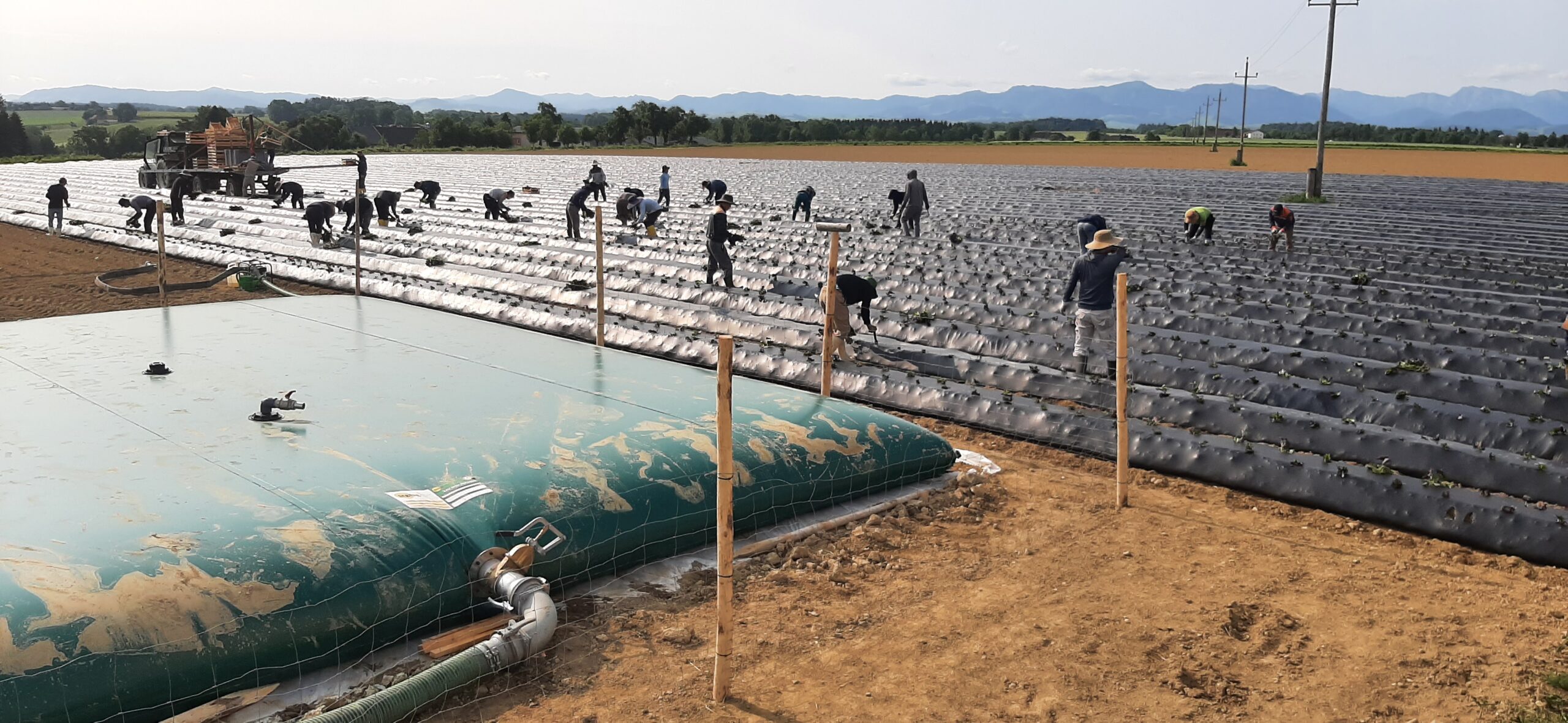
They can be used for rainwater harvesting, watering, irrigation, water storage, temporary storage, certain agricultural liquids, fire safety projects, or technical needs depending on the selected range.
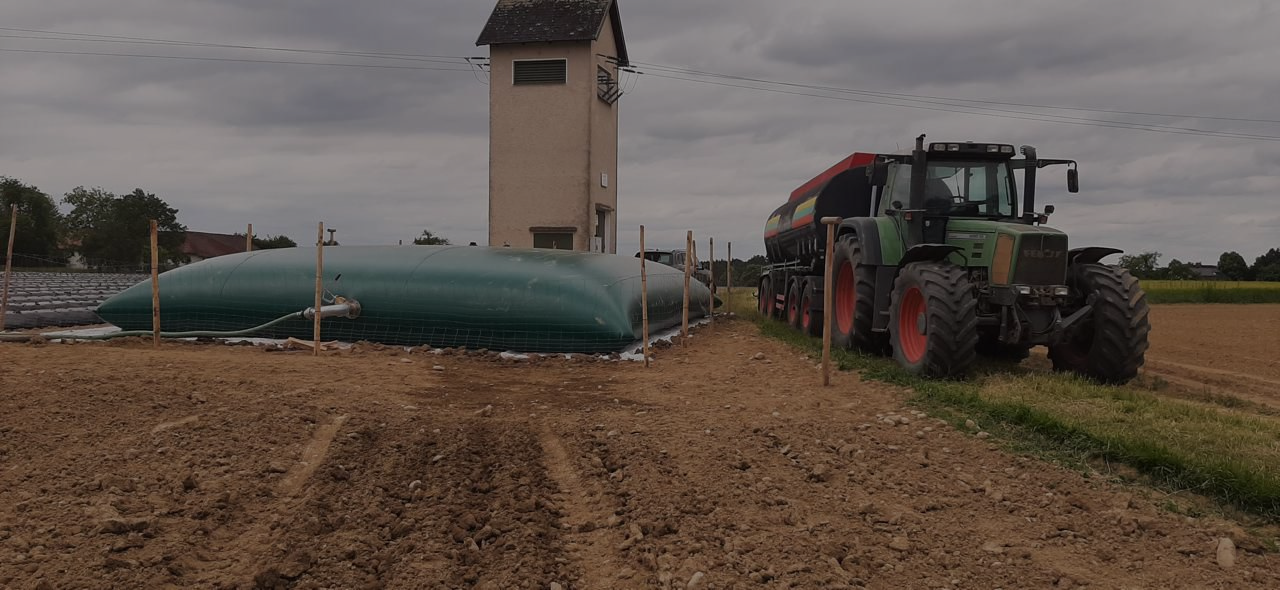
A flexible tank is practical, compact when empty, easy to transport, and quick to install on a suitable surface. It allows the creation of a storage reserve without heavy construction work when the site conditions allow it.
It also provides a closed solution, which limits the exposure of the stored liquid to external elements. Depending on the need, it can be an interesting alternative to rigid tanks, open basins, or underground structures.
The basic flexible tank is designed for simple water storage needs, with capacities ranging from 0.3 to 30 m³. It is suitable for rainwater harvesting, watering, light irrigation, gardens, construction sites, and temporary uses.
The standard flexible tank is more configurable. It can range from 0.3 to 2,000 m³ and is suitable for professional, agricultural, industrial, or local authority projects. It can include stainless steel or polypropylene valves, fittings, flanges, and equipment adapted for filling and draining
The choice depends on the liquid to be stored, the desired volume, the intended use, the available surface area, and site constraints.
For simple use, a basic flexible tank may be sufficient. For a professional project or large capacity, a standard flexible tank is often more suitable. For drinking water, liquid fertilizers, or fire reserve applications, it is better to choose a dedicated range.
Yes, but you must use a flexible tank specifically designed for drinking water storage. Not all flexible tanks are intended for this use.
For a drinking water project, it is recommended to choose a suitable range, with materials, accessories, and configurations compatible with the intended use
Yes, a flexible tank can be used for certain liquid fertilizers or agricultural solutions, provided you choose a suitable range and check the compatibility between the stored product, the liner, the valves, the fittings, and the accessories.
Each project must be assessed before manufacturing in order to provide a solution adapted to the liquid, the volume, and the operating conditions
Yes, a flexible tank can be used to create a fire water reserve. However, the volume, location, accessibility, equipment, and connections must be validated according to applicable local regulations, particularly those of the SDIS and the departmental external fire protection regulations.
For this type of project, it is preferable to choose a dedicated fire reserve flexible tank
A flexible tank must be installed on a flat, clean, stable, and prepared surface. The ground must be free of any sharp or piercing objects.
Depending on the project, it can be installed outdoors, on a prepared platform, under a shelter, in a suitable crawl space, on a construction site, on a farm, or at a professional facility
No, a flexible tank is designed to be placed above ground or in a suitable space, such as a crawl space when conditions allow it.
It must not be buried directly. For installation under a building or in an enclosed space, sufficient space must be provided around the tank, and the site’s technical constraints must be checked.
Installation is generally simple when the ground is properly prepared. The tank must be placed on a flat, stable, clean surface free of any sharp or damaging objects.
For small volumes, installation can be quick. For large capacities, technical uses, or professional projects, it is recommended to carefully prepare the site and validate constraints before installation.
Yes, for small volumes and simple uses, installation can often be carried out by the customer if the surface is properly prepared.
For large capacities, professional projects, drinking water, fire reserve systems, or technical configurations, it is preferable to seek advice to avoid installation errors
In many cases, a surface-installed flexible tank does not require a building permit. However, the rules may vary depending on the municipality, site, volume, intended use, and installation context.
It is therefore recommended to check local planning regulations before installation, especially for professional, agricultural, industrial, or large-capacity projects
The volume depends on your use, the amount of water or liquid to be stored, the frequency of use, the available space, and the desired level of autonomy.
For a garden or simple use, a small volume may be sufficient. For irrigation, a construction site, a farm, or a professional site, a larger capacity may be required. Our team can help you choose the appropriate volume
DN50 and DN100 refer to the diameter of filling or draining equipment. The choice depends on the tank volume, the desired flow rate, the equipment used on site, and the type of connection.
DN50 may be suitable for certain small and medium volumes. DN100 is often more suitable for larger volumes or higher flow rate requirements.
The choice between a stainless steel valve and a polypropylene valve depends on the stored liquid, intended use, chemical compatibility, desired flow rate, and operating conditions.
For technical projects, it is important to validate valves, flanges, fittings, and accessories before manufacturing to ensure a suitable configuration.
Maintenance depends on the intended use and the stored liquid. For water use, it is recommended to regularly check the fittings, the overall condition of the tank, the installation surface, and the equipment.
Periodic cleaning may be required depending on usage. Harsh products that could damage the liner or accessories should be avoided.
Avoid aggressive chemicals, solvents, abrasive products, or sharp tools that could damage the liner, welds, fittings, or accessories.
For basic cleaning, use clean water and, if necessary, a mild product compatible with the intended use of the tank.
A flexible tank can slightly change shape depending on its filling level. However, if it collapses abnormally, the stability and flatness of the ground should be checked.
The issue may come from an improperly prepared surface, ground subsidence, or incorrect positioning. If in doubt, contact our team.
If you notice a leak, first check the fittings, valves, and accessories. A leak can sometimes come from a loose connection or a poorly positioned component.
If the issue persists, contact our customer service with photos, the tank reference, the volume, the intended use, and the location of the leak so we can guide you.
Cold resistance depends on the product range, the stored liquid, the filling level, and installation conditions. It is important to protect exposed valves, fittings, and accessories.
During freezing conditions, avoid any sudden handling of the equipment and seek advice if your tank is installed in an area heavily exposed to cold temperatures.
A closed flexible tank limits the water’s exposure to air, light, and external elements. This reduces the risk of algae growth or mosquito development compared to open storage.
It remains important to properly seal access points, check fittings, and maintain collectors or filters depending on the installation.
The shape and dimensions depend on the product range, the desired volume, and manufacturing constraints. Some projects can be designed with customized dimensions.
For a specific configuration, it is recommended to provide the available space, maximum height, desired volume, and site constraints.
Delivery times depend on the product range, volume, options, availability, and delivery destination.
For simple, readily available models, the lead time may be shorter. For standard tanks, large-capacity units, liquid fertilizer tanks, drinking water tanks, or fire water reserves, the delivery time depends on manufacturing and the required configuration.
You can request a quote from our contact page or via the form available on the product pages. To receive an accurate response, please indicate the type of tank, the desired volume, the liquid to be stored, the installation location, the intended use, and the required accessories.
Our team will propose a solution tailored to your project.
To prepare a quote, please ideally provide:
- the type of liquid to be stored ;
- the desired volume ;
- the intended use ;
- the installation location;
- the available surface area ;
- filling and draining requirements ;
- desired accessories ;
- the required timeframe ;
- any specific site constraints.
yes, Serena Group delivers its flexible tanks in UK. Delivery conditions may vary depending on the product range, volume, weight, destination, and site access constraints.
For professional projects or large-capacity tanks, delivery terms are specified at the quotation stage.
The manufacturing of flexible tanks is part of a quality approach governed by several recognized standards, including ISO 9001, ISO 14001, and ISO 45001.
Depending on the products and ranges concerned, some tanks may also be associated with QB certification issued by CSTB. The applicable certifications must always be verified according to the intended use: drinking water, liquid fertilizers, fire reserves, water storage, or other specific needs.
ISO certifications are internationally recognized according to the standards published by the International Organization for Standardization. QB certification is issued according to CSTB standards.
A flexible retention bassins is used to secure the storage of liquids by limiting the risk of spillage in the event of leaks, overflow, or incidents involving a tank, vessel, drum, piece of equipment, or storage area.
It is particularly useful for agricultural and industrial sites, construction sites, technical areas, workshops, or temporary installations that require a suitable containment solution based on the stored liquid and site constraints.
The choice of retention bassin depends on the volume to be secured, the type of liquid, available space, intended use, and applicable site regulations. For a professional project, it is recommended to verify the required containment capacity before installation
A flexible tank is used to store a liquid, while a flexible retention bassin is used to contain or secure a storage area in the event of leakage, spillage, or overflow.
The tank is therefore used as the main reservoir. The retention bassin is used as a safety solution around or under equipment, a tank, a drum, a flexible tank, or a technical area.
Depending on the project, both solutions can be complementary: the flexible tank provides storage, while the flexible retention bassin enhances the safety of the installation.
Manufacturer with over 50 years of industrial expertise
Serena Group relies on the industrial expertise of the Serena Group to provide flexible storage solutions tailored to the needs of professionals in UK.
Our team supports each client in selecting the capacity, type of tank, accessories, and the most suitable configuration for their project.
Key strengths :
- Experienced manufacturer of flexible solutions
- Technical support before ordering
- Delivery throughout UK
- Solutions adapted to site constraints
- Custom configuration available depending on the project
- Personalized quote based on capacity and use
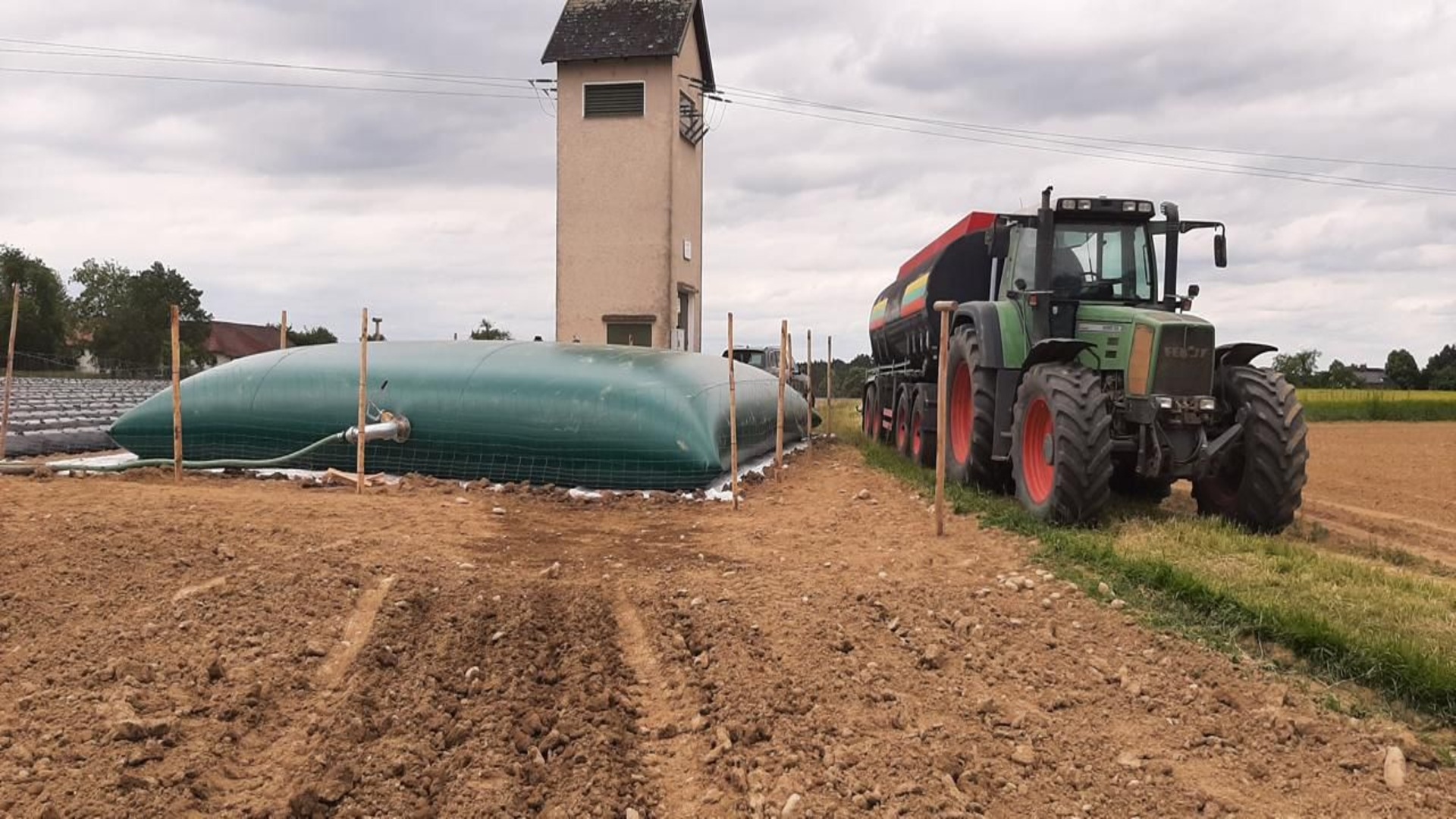
Discover also our full range of certified flexible tanks and containment systems :
OUR ACHIEVEMENTS
Serena Group in numbers: a manufacturer of flexible tanks and retention bassins since 1970
A manufacturer of professional flexible tanks, flexible retention bassins, reservoirs, and flexible solutions for water storage and liquid containment in UK and worldwide
we export to 27 countries
International presence
SATISFIED CUSTOMERS
Private individuals & professionals
LOGISTICS WAREHOUSES
Storage and distribution
SINCE
Years of expertise
Contact us
Need help choosing your flexible tank ?
Do you have a project for a flexible tank, water storage, drinking water, liquid fertilizer, fire water reserve, or a containment tray? Our team supports you in choosing the appropriate range, volume, and equipment.
Contact us to receive advice or a personalized quote.
 Basic cisterns
 Standard cicterns
 Fire-fighting tanks
 Potable water tanks
 Retention bassin