
flexible tanks installation
Industrial flexible tanks: securing temporary or permanent water storage

Industrial flexible tanks: securing temporary or permanent water storage
On an industrial site, having a water reserve in the right place can support very different requirements: temporary process supply, wash water, buffer storage, business continuity, testing, an extension project or rainwater harvesting. An industrial flexible tank is a storage solution particularly suited to projects that require installation without major civil works, adaptable capacity and simplified logistics.
To meet the site’s actual constraints, selection should not be based on volume alone. The liquid, operating frequency, access to connections, available footprint, filling and emptying conditions all contribute to a reliable installation. This guide sets out a practical method for defining an industrial water-storage project in the UK.
Why use an industrial flexible tank?
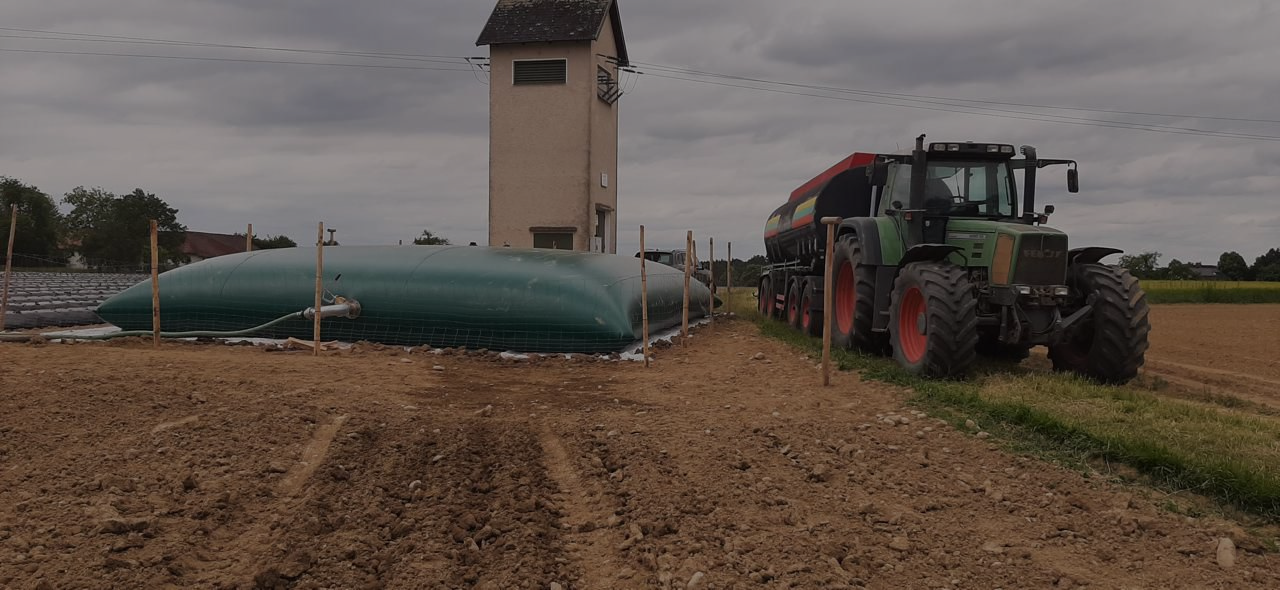
A flexible tank is a closed reservoir made from technical fabric, designed to store compatible liquids. When empty, it is compact, making it easier to transport and position than a rigid tank intended for the same use. Once installed on a suitable surface, it takes shape as it is filled.
In industrial settings, this operational flexibility is valuable where requirements are not fixed. A reserve can be placed close to a production area, on an outdoor platform, under cover or in a prepared technical area, without immediately requiring an underground structure. A flexible tank is not designed to be buried directly.
Typical benefits include:
- creating temporary water storage during works, planned shutdowns or short-term increases in demand;
- providing a buffer volume between water collection, treatment and use;
- limiting civil-engineering work where an above-ground installation is suitable;
- adapting connections, valves and accessories to the intended operating method;
- adjusting capacity or configuration as the site develops.
SERENA standard and configurable flexible tanks cover capacities from 0.3 to 2,000 m³, depending on the project. The most suitable capacity still depends on the intended use, available footprint and liquid to be stored.
Define the storage requirement before choosing a tank
A well-selected industrial flexible tank responds to a clear use case. Before requesting a solution, gather the information needed to determine the right capacity and configuration.
Identify the role of the reserve
The tank may be used as primary storage, an emergency reserve or a buffer. These roles do not create the same requirements. A buffer tank, for example, should be designed around variations between incoming flow and consumption. Storage for washing should take account of the withdrawal pattern and connected equipment. For rainwater harvesting, consider the collection area, seasonal supply and planned uses.
One installation can sometimes supply several non-potable uses. In that case, priorities need to be established: must a minimum volume be retained? Are withdrawals continuous or made in batches? Can filling take place while water is being used? The answers provide the basis for sizing the installation.
Calculate usable capacity, not just theoretical volume
To decide what flexible tank capacity to choose, begin with the volume genuinely needed over a representative period: one production day, a cleaning cycle, a week of autonomy or the expected duration of a construction project. Then add an appropriate operating margin for changes in supply and consumption, without unnecessarily oversizing the installation.
The requirement should also be compared with filling capability. A large reserve does not guarantee autonomy if the water source is insufficient; equally, a tank that is too small can result in frequent, restrictive refilling. For a complementary approach, see our guide on calculating the ideal volume for a flexible tank.
Choose a configuration suited to industrial use
Tank selection is about more than capacity. An industrial configuration should be considered as a complete system: the tank body, filling, emptying and connection equipment, and the operating conditions on site.
Check compatibility with the stored liquid
Rainwater, water for technical use, liquid fertiliser, compatible effluent and other industrial liquids do not necessarily require the same solution. Compatibility between the stored liquid, the tank fabric, valves, fittings and accessories must always be checked.
This verification is essential before manufacture or ordering, especially where the liquid is a process product, effluent or agricultural solution. Projects involving potable water, liquid fertiliser or fire-water storage require a dedicated range or configuration. A rainwater-harvesting tank must not be treated as a potable-water solution.
Plan filling and emptying operations
An effective installation takes account of the water route. First identify the filling source: mains supply, tanker, rainwater collection, transfer from another reserve or process equipment. Then define how water will be drawn off: by gravity, pump, distribution network or occasional connection.
Valves, fittings, flanges and accessories can be configured for the project. Their selection depends on the expected flow rate, equipment already used on site, access to connection points and the stored liquid. Also plan inspections, cleaning and maintenance: accessible equipment makes routine checks easier.
Prepare the location: a decisive stage
The quality of the laying surface directly affects the tank’s operation. A flexible tank must be installed on a level, stable, clean and prepared surface. The ground must be clear of sharp, protruding or abrasive items that could damage the fabric.
Before installation, check in particular:
- the available footprint, allowing for the filled tank and access to equipment;
- the platform’s stability and the absence of areas likely to settle;
- movement of personnel, plant or vehicles close to the installation;
- protection of valves and fittings from impact;
- access to the filling source and distribution point;
- management of water around the installation to keep the area clean and usable.
Some projects require flexible-tank dimensions to be adapted to a restricted area, such as a technical corridor, building, space between equipment or existing platform. Standard tanks can be configured for the project. It is therefore useful to provide the site dimensions, any height restrictions, and a plan or photographs when making an enquiry. Find further practical information on flexible tank installation.
Flexible tank or rigid tank for an industrial site?
The question of a flexible versus rigid tank often arises when creating a water reserve. The two options should not be viewed as absolute alternatives; their constraints need to be compared against the project.
| Criterion | Flexible tank | Rigid tank |
|---|---|---|
| Empty-tank logistics | Compact, transportable and deployable on site | Fixed bulk, often requiring more extensive handling |
| Installation | Placed on a prepared surface; not for direct burial | Above-ground or underground solution depending on the model and project |
| Capacity adaptation | Configurations can be considered for project requirements | Depends on available formats and equipment |
| Suitable use | Temporary reserve, buffer storage, changing requirements or constrained sites | Fixed installation where a rigid solution better meets site constraints |
The right choice therefore depends on use, expected operating duration, available space, access and internal site constraints. A technical review before selection avoids deciding on capacity alone.
Build safety and maintenance into daily operation
Industrial storage requires clear organisation. Even for water, it is good practice to identify who checks the level, connections, platform condition and transfer equipment. Regular visual inspections can help identify an issue around a valve, fitting or the installation environment promptly.
For liquids that may present an environmental risk, containment should be assessed according to the product, stored volume and requirements applicable to the site. A flexible containment basin can complement a storage installation or transfer operation. Chemical compatibility and the necessary containment capacity should always be confirmed on a case-by-case basis.
Some uses require a specific range, including potable water, fire-water reserves and liquid fertiliser. A flexible tank intended for fire-water storage should be defined according to applicable local requirements, access arrangements and expected equipment. It should not be sized using a generic estimate alone.
FAQ: industrial flexible tanks
Can an industrial flexible tank store every type of liquid?
No. Compatibility between the liquid, tank fabric, valves, fittings and accessories must be checked before a tank is selected. Potable-water, liquid-fertiliser, fire-water and technical-liquid projects require an appropriate dedicated range or configuration.
Can an industrial flexible tank be installed indoors?
An installation under cover or in a suitable internal space can be considered where the surface is level, stable, clean and prepared, and where access for installation, filling, emptying and inspection is available. The tank must not be buried directly.
How can I determine the dimensions required?
Measure the available footprint, circulation areas, connection locations and space needed around the equipment. Also provide the required capacity and any height or access restrictions so that an appropriate configuration can be considered.
Can a flexible tank be used for a temporary requirement?
Yes. Its compact empty format and installation on a prepared surface make it suitable for many temporary needs, including construction works, water transfer, site reserves, maintenance and occasional capacity increases.
Is a containment basin required?
This depends on the stored liquid, volume, associated equipment and site requirements. Where a product presents a risk, review the applicable obligations and select a containment solution compatible with that product.
A solution designed around your operation
An industrial flexible tank can provide practical, configurable water storage for a wide range of sites. Its effectiveness relies on thorough preparation: defining the genuine requirement, selecting useful capacity, checking compatibility, preparing the platform and planning both connections and daily operation.
To select a standard tank, a large-capacity solution or a made-to-measure configuration, explore the types of flexible tanks available from SERENA GROUP. You can also contact our team with the liquid, required volume, available dimensions, filling method and intended use to discuss a suitable solution for your project.
 Basic cisterns
 Standard cicterns
 Fire-fighting tanks
 Potable water tanks
 Retention bassin