

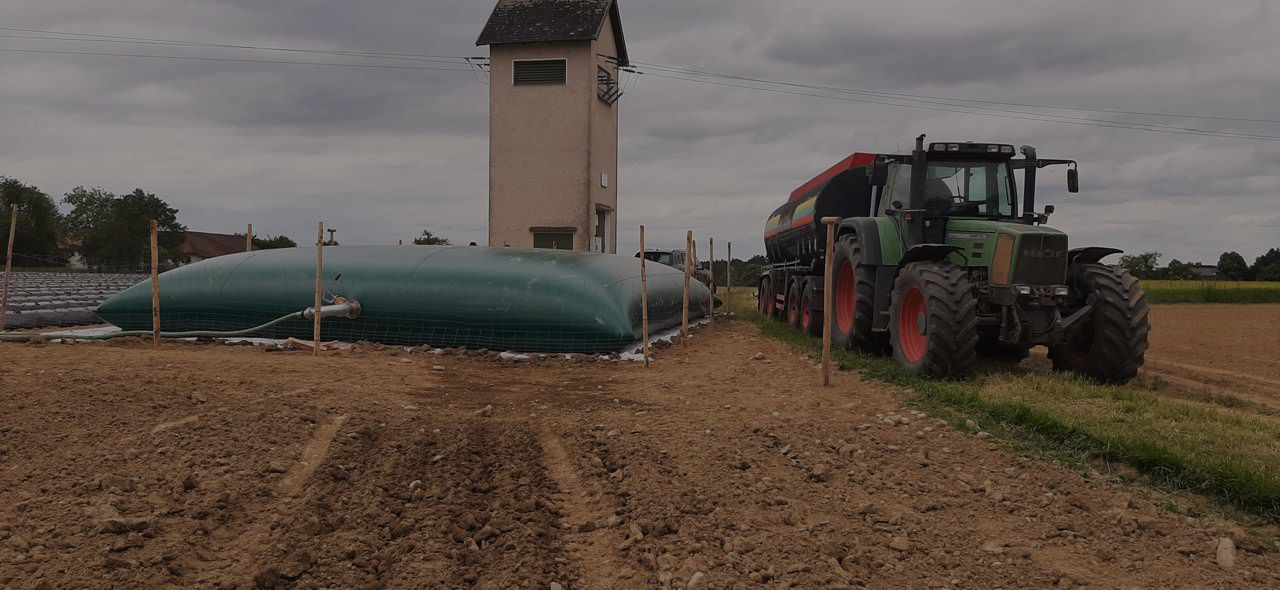
flexible tanks installation
Industrial Flexible Tank: Secure Temporary Water Storage On Site

Industrial Flexible Tank: Secure Temporary Water Storage On Site
At an industrial site, having water available at the right time can support the continuity of many operations: cleaning, testing, dust control, track watering, a compatible process supply, a buffer volume or a short-term requirement. When an installation needs to be deployed quickly, adapted to the available space and installed without major construction work, an industrial flexible tank is a water-storage solution worth considering.
Unlike a permanent structure, a flexible tank is compact when empty and can be installed on a prepared area that is level, stable and clean. Its value does not lie in the tank alone, however. A reliable project depends on appropriate sizing, compatibility between the liquid and the equipment, careful ground preparation and a well-organised connection layout.
Why provide temporary water storage at an industrial site?
Industrial water requirements are not always constant. Consumption can increase during construction works, maintenance periods, dry weather or the start-up of an activity. Temporary water storage makes it possible to separate the time when water is available from the time when it is needed.
A flexible tank may be considered to:
- create a dedicated water reserve for a compatible technical use;
- store water collected from a roof or an existing supply before reuse;
- provide a buffer volume during maintenance work or a construction project;
- make water available for cleaning, watering or dust limitation, according to site needs;
- respond to a temporary constraint at a remote or insufficiently connected site.
The flexible solution is especially relevant where logistics before installation need to be kept to a minimum. Empty, the tank is easier to transport and store than a rigid tank of comparable capacity. Ease of deployment should not be confused with an absence of preparation: the installation area and the selected accessories are central to the reliability of the overall system.
Key criteria when choosing an industrial flexible tank
1. Define the liquid to be stored
The first question is straightforward: what liquid will actually be stored? Rainwater, mains water, process water, an agricultural solution, compatible effluent or another technical liquid all require prior assessment. The tank fabric, valves, connectors and accessories must be compatible with the liquid, the operating conditions and the intended transfer method.
For water intended for human consumption, it is essential to choose a dedicated potable-water range. A tank intended for technical water or rainwater should not be assumed suitable for drinking water without specific confirmation.
2. Calculate the useful volume rather than selecting the largest option
The right capacity depends on daily demand, refill frequency, the duration of the operation and the margin required to absorb variations. For a temporary water-storage installation, it is useful to answer four questions:
- What volume is used during one day or one operating phase?
- How often can the reserve be refilled?
- How many days of autonomy are required?
- What installation footprint is genuinely available?
SERENA configurable standard tanks can cover projects from 0.3 to 2,000 m³, depending on the configuration. This broad range does not remove the need to assess the footprint: a higher capacity requires a suitable laying area and safe circulation around valves and connections. For further guidance on capacity, see how to calculate the ideal volume for a flexible tank.
3. Plan flow rates and connections in advance
A correctly sized reserve can still be impractical if filling or emptying has not been planned properly. Identify the water source, available equipment and flow rate required by the application. Depending on the project, connectors, valves and accessories can be configured for filling, draw-off or transfer constraints.
Before requesting a quotation, gather the following information: liquid type, required volume, filling method, existing pumping or distribution equipment, expected connector diameter or type, and the proposed tank location. This makes it easier to identify a coherent configuration.
Preparing the site: a decisive stage
An industrial flexible tank must be installed on a level, stable, clean and prepared surface. The area should be cleared of stones, debris, sharp items, exposed roots and uneven features that could damage the tank fabric or create concentrated stresses as it fills.
Preparation should also take daily operation into account. Plan for:
- clear access for delivery, filling and inspections;
- suitable protection against impact from vehicles, machinery or handling operations;
- space to reach valves and connectors without walking on the tank;
- a clear route for hoses, pumps and any associated cables;
- management of overflow and run-off in accordance with the constraints of the site.
A flexible tank is not designed to be buried directly. Where space is restricted, the assessment should cover the available length and width, acceptable height, access routes and the immediate surroundings. Review the flexible tank installation guidance before preparing the area or arranging delivery.
Tank, secondary containment and safety: different functions
A flexible tank is a storage reservoir. A flexible containment basin serves a different purpose: it is designed to contain an area or piece of equipment in the event of a leak, overflow or accidental spill. The two solutions can complement one another, but they are not interchangeable.
For a technical liquid, an industrial project should therefore include consideration of leak risks, the expected level of protection and the rules applying to the individual site. Required containment capacity, chemical compatibility and environmental obligations cannot be assumed; they should be checked for each installation. SERENA’s flexible tank and containment basin range helps distinguish the available product families.
A simple method for defining your project
Before selecting an industrial flexible tank, set out the requirement in a short brief. This helps prevent decisions being based only on an approximate capacity.
- Describe the application: occasional storage, rainwater, technical supply, construction work, maintenance or a seasonal need.
- Identify the liquid: its nature determines the range and equipment that must be checked.
- Estimate the volume: consider consumption, desired autonomy and refill frequency.
- Measure the installation area: record length, width, access, obstacles and vehicle movements.
- List the connections: inlet, outlet, pump, hoses and existing accessories.
- Assess safety: consider protection of the installation, access to operating components and any possible containment requirement.
This preparation is also useful when comparing a standard solution with a made-to-measure flexible tank. A bespoke configuration can be relevant where footprint, capacity, connection or operating constraints do not match a usual arrangement. Explore the types of flexible tanks available for different requirements.
FAQ: industrial flexible tanks
Can an industrial flexible tank store liquids other than water?
Some configurations can be considered for compatible liquids, including agricultural and industrial applications. Compatibility between the liquid, tank fabric, valves, connectors and accessories must always be checked before selecting a solution.
Can a flexible tank be used for drinking water?
Only a range dedicated to potable water, with a configuration suitable for that purpose, should be considered. A standard tank or a tank intended for rainwater must not be used for drinking water without specific confirmation.
Is a concrete slab required for an industrial flexible tank?
The essential requirement is a level, stable, clean and prepared surface. The appropriate preparation method depends on the ground and the project. Above all, the support must be free from items that could damage the tank or compromise its stability.
Can an industrial flexible tank be moved?
When empty, a flexible tank is compact and transportable. Any move still needs preparation: complete draining, cleaning appropriate to its use, drying where necessary, inspection of the equipment and preparation of the new installation area.
What information is needed for a useful quotation?
Provide the liquid to be stored, required capacity, intended use, available site dimensions, filling method, emptying method and required accessories. You can submit these details through the request a quote page or contact SERENA Group via the contact page.
Conclusion: an adaptable reserve that should be planned as a complete system
An industrial flexible tank offers a practical response to temporary water-storage needs and projects requiring adaptable installation without substantial construction work. Its value depends on a complete approach: a compatible liquid, useful capacity, prepared ground, appropriate connections and consistent safety measures.
To define a solution suited to your site in the United Kingdom, review the SERENA flexible tank catalogue and request technical guidance with the key characteristics of your project. SERENA Group can help identify the product family, equipment and configuration to assess for your requirements.
 Basic cisterns
 Standard cicterns
 Fire-fighting tanks
 Potable water tanks
 Retention bassin