
flexible tanks installation
Flexible containment bund: how to choose the right solution for your site

Flexible containment bund: how to choose the right solution for your site
A flexible containment bund helps control the consequences of a leak, overflow or incident when liquids are stored or handled. It creates a temporary or long-term secondary containment area beneath a tank, vessel, drums, mobile equipment or technical work area. Farms, industrial premises, construction sites, workshops and remote locations can therefore add protection around sensitive areas without necessarily building a permanent rigid structure.
However, useful secondary containment is not selected on dimensions alone. The nature of the liquid, the volume that could be released, the equipment in place, site traffic and requirements applicable to the activity should all be considered together. This guide sets out a practical method for selecting and installing a solution that suits your project.
What is a flexible containment bund for?
A flexible tank is a reservoir designed to store a liquid. A flexible containment bund, by contrast, is a safety product intended to hold liquid that escapes from a primary container or during a filling, emptying or transfer operation.
This distinction matters. A containment bund does not replace the selection of a compatible tank, maintenance of connections or proper organisation of operations. It is an additional protective measure that can limit the spread of liquid across the ground and make a rapid response easier if an incident occurs.
Typical uses include:
- protecting a storage area for drums, jerry cans or tanks;
- temporarily securing a transfer point;
- protecting agricultural, industrial or construction equipment;
- creating a containment area at a site with no fixed bund;
- supporting the storage of technical liquids, subject to the required compatibility checks.
The flexible format offers a practical benefit: when not in use, it can be folded and transported more easily than a rigid solution of similar capacity. It must nevertheless be installed on a suitable surface and protected from punctures, impacts and unauthorised vehicle traffic.
Five criteria for choosing a flexible containment bund
1. Identify the liquid precisely
The first question is not “what capacity do I need?” but “which liquid must be contained?”. Water, liquid fertiliser, compatible effluent, oil and other technical liquids do not have the same requirements. The technical fabric, welded seams, any valves and the accessories must be compatible with the actual product, including its concentration and conditions of use.
Never assume that one material is suitable for every chemical product. For a professional project, prepare the exact product name and its safety data sheet before making an enquiry. This check is particularly important for liquid fertilisers, hydrocarbons, treatment products and industrial liquids.
2. Determine the volume to be contained
The containment capacity should reflect the credible leak scenario at your installation: the contents of the largest container, the quantity handled during an operation or the volume present in a given area. Requirements may vary according to the liquid, the type of site, the sector and local conditions. There is therefore no single capacity that is suitable for every situation.
Before ordering, make a straightforward inventory of:
- the number and capacity of the tanks, drums or containers concerned;
- the maximum volume present at one time;
- the risk of a leak during filling or emptying;
- possible rainwater entering the bund where it is installed outdoors;
- internal procedures and requirements that apply to your site.
This approach helps avoid choosing a bund that is too small to perform its purpose, or a solution that is unnecessarily difficult to operate. If you are unsure, have the requirement reviewed by your HSE lead, site operator, insurer or relevant competent authority, depending on the context.
3. Measure the real footprint
Capacity alone is not enough: a flexible containment bund must also accommodate the equipment without placing its walls under strain. Record the length, width and overall footprint of the containers, as well as the space required for hoses, connections, pumps and maintenance activities.
Allow access to inspect the equipment. An installation that is too tight makes it harder to check valves and spot a leak. If your site has a particular layout, for example between machines, within a building or beside a tank, a configuration adapted to the project may be more appropriate.
4. Plan access and traffic
A flexible containment bund may be used where equipment needs to be placed or moved. Access then becomes a central consideration: does a forklift truck, pallet truck, vehicle or only personnel on foot need to enter the area? Entry and exit conditions should be established at the design stage so that the solution selected is compatible with the intended operation.
Never drive equipment over a liner or edge that has not been designed for that purpose. Organise movements, mark out the area and protect exposed parts from impacts. A well-sized bund that is poorly integrated into site traffic can itself become a source of risk.
5. Prepare for what happens after an incident
Containment does not end when liquid has been collected. You also need to plan how retained liquid will be pumped out, recovered, identified and managed in accordance with the procedures that apply. Define the pumping arrangements, any absorbent materials, personal protective equipment and waste-management route in advance.
This preparation turns the bund into an operational part of a prevention plan rather than simply a piece of equipment placed on the ground.
Installing a flexible containment bund: good practice
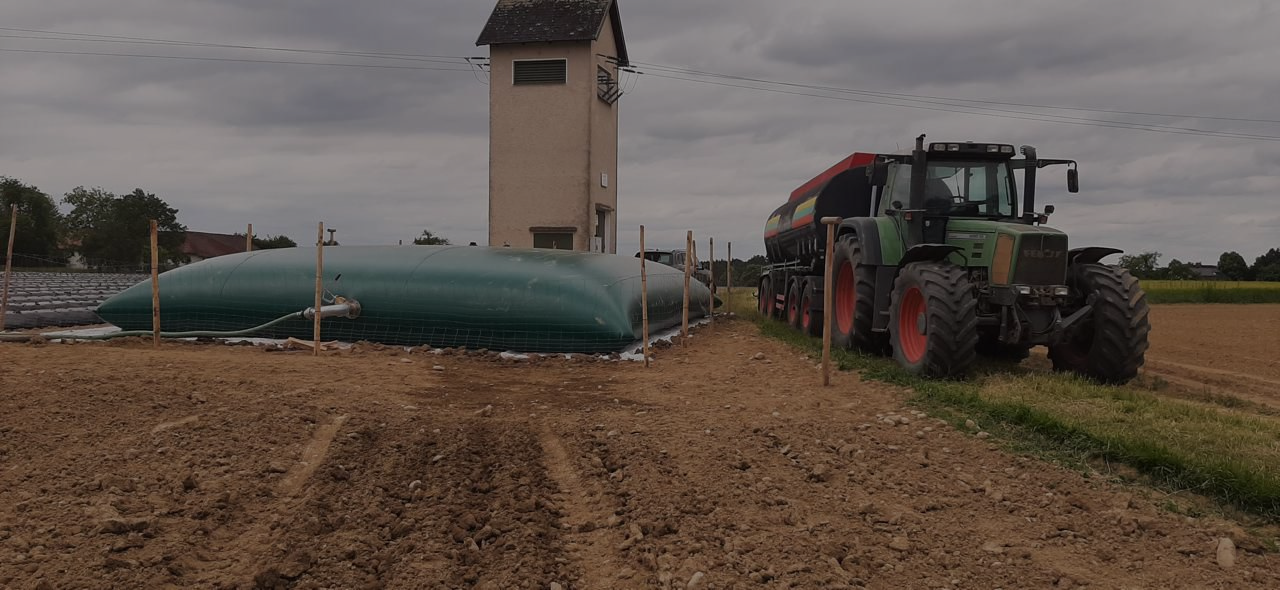
Like a flexible tank, a containment bund should be placed on a level, stable, clean and prepared surface. This limits pressure points and reduces the risk of premature wear. Remove stones, metalwork, roots, sharp debris and any item that could cause a puncture.
An effective installation sequence will generally include the following steps:
- Mark out the area: check dimensions, access routes and the absence of obstacles.
- Prepare the support: clean it, level it where necessary and add ground protection appropriate to the project.
- Deploy the bund: position the liner without harsh folds or abnormal tension.
- Position equipment: place containers or machinery securely while keeping connections accessible.
- Inspect before use: visually check the sides, corners, accessories and immediate surroundings.
- Organise monitoring: nominate people to check the level, condition of the bund and transfer operations regularly.
An outdoor area requires particular attention to weather exposure. Rainwater can reduce the capacity available in the bund. Depending on the liquid stored and site arrangements, shelter, compatible cover or a procedure for managing collected water may be needed.
For more preparation guidance, see Serena Group’s flexible tank installation advice. The same principles of a clean, prepared and stable support are relevant when planning flexible equipment.
Flexible or rigid bund: which solution should you choose?
| Criterion | Flexible containment bund | Rigid containment bund |
|---|---|---|
| Transport and empty storage | Compact, foldable and practical for mobile requirements | Requires more permanent storage space |
| Installation | Quick to deploy on a properly prepared surface | Ready to use depending on the model |
| Suitability for a large footprint | May suit large areas and equipment, depending on the configuration | Often limited by the available tray dimensions |
| Frequent handling operations | Should be assessed according to access and traffic conditions | May suit standardised, fixed containers |
The right choice depends less on a simple opposition between flexible and rigid products than on the real use case. A flexible solution can be especially relevant where the need is temporary, mobile, large in footprint or subject to transport constraints. A rigid solution may be appropriate for a fixed area, repeated small containers or an environment with very frequent handling. In every case, check compatibility with the liquid and the requirements of the site.
Combining flexible storage and secondary containment
On a farm, industrial site or construction project, a flexible tank and a containment bund perform two separate but complementary functions: one stores liquid, while the other contains an accidental release. Serena Group offers configurable flexible tanks and flexible containment solutions. The choice of technical fabric, connections, valves and accessories should always be based on the liquid, required capacity and project constraints.
For specific applications, choose a dedicated range. Potable water, fire-water reserves and liquid fertilisers should not be treated as interchangeable uses. A tank designed for one purpose should not be used for another without compatibility validation. You can explore the different types of flexible tanks to clarify your requirement before seeking project support.
Flexible containment bund FAQ
Can a flexible containment bund hold any liquid?
No. Compatibility between the liquid, technical fabric, seams and accessories must always be checked. Provide the exact nature of the product to be stored or retained before selecting a solution.
Can a flexible containment bund be installed directly on soil?
The support must be prepared, level, stable and free from sharp objects. Natural ground that is uneven or obstructed increases the risk of punctures and uneven load distribution.
How do I calculate the containment capacity I need?
Start with the containers on site, the maximum volume that could be released and the incident scenario selected. Then check the requirements that apply to the liquid and the site with the appropriate competent contacts.
Does a containment bund replace maintenance of tanks and connections?
No. It complements prevention measures. Checks of valves, connections, hoses and containers remain essential for reducing the risk of a leak at source.
Is a flexible containment bund suitable for temporary installations?
Yes. Its compact format when empty and ease of deployment can be useful on a construction site or temporary technical area, provided the ground is prepared and access is properly organised.
Choose suitable containment to better protect your activity
An effective flexible containment bund is based on a simple but thorough assessment: the liquid involved, the possible release volume, available footprint, traffic, installation surface and incident-response procedures. This method helps you select a solution that can be used in practice and reduce the risk of accidental spread.
To review a configuration suited to your activity, consult the SERENA flexible tank catalogue or contact Serena Group with the key information: liquid, volume, available dimensions, equipment concerned and installation conditions. For further practical information, see the flexible tank and containment bund FAQ.
 Basic cisterns
 Standard cicterns
 Fire-fighting tanks
 Potable water tanks
 Retention bassin